



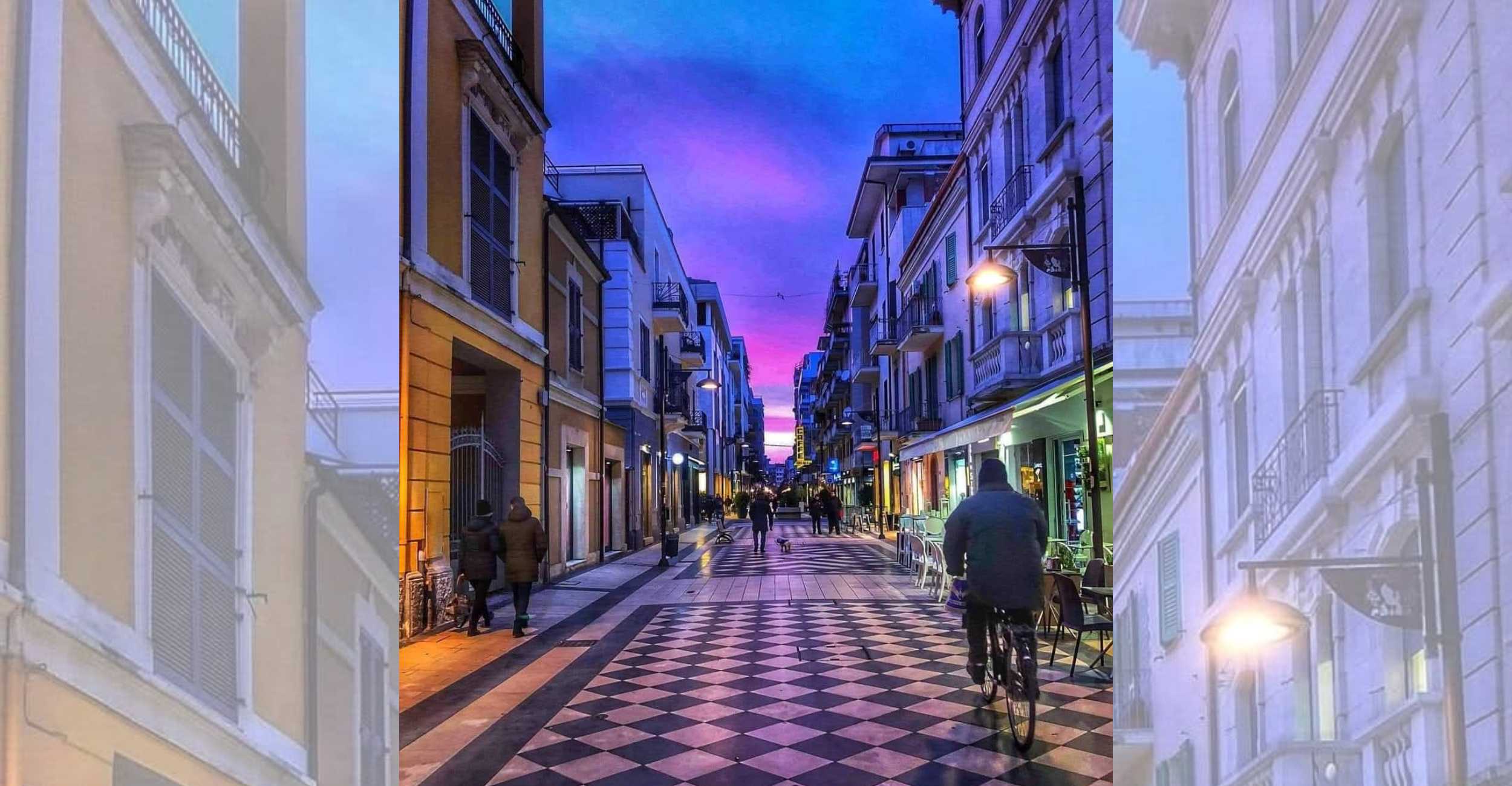
Pescara may first draw visitors for its long Adriatic beaches and relaxed summer vibe, but the city truly comes alive when twilight settles over its streets. In the heart of it all, Via Firenze captures the quiet energy of Pescara after dark, where elegant architecture, soft streetlights, and unhurried evening walks reveal a side of the city most guidebooks miss.
If you’re looking for things to do in Pescara, an evening stroll along Via Firenze is one of the loveliest ways to feel the city’s soul—without rushing from monument to monument. This is a perfect pick for couples, solo travelers, and anyone who enjoys slow, atmospheric city‑wandering with a glass of local wine in hand.
Things to Do in Pescara at Night
Once the sun dips below the Adriatic, Pescara trades beach towels for aperitivo glasses and soft streetlights. Here’s what to do after dark:
- Stroll along Via Firenze
The tree‑lined avenue, framed by pale‑faced buildings and geometric paving, feels like a living postcard. As the “blue hour” washes over the façades, the street becomes a gentle stage for cyclists, locals, and curious visitors all sharing the same peaceful rhythm. - Join the aperitivo culture
A few bars and cafés line the road, many specializing in quick snacks, panini, and coffee by day and aperitivo by evening. Grab a seat at a pavement table, order a local Montepulciano d’Abruzzo or a crisp Pecorino, and sip slowly as the city lights ripple down the street. - Snap atmospheric photos
With its long, symmetrical perspective and warm‑lit shopfronts, Via Firenze is a dream for photographers. Try arriving just before sunset and staying through the first hour of dusk to catch shifting colors from violet skies to soft yellow streetlamps. - Let the evening guide you
From Via Firenze you can easily drift toward the old town or the litoral (seaside promenade), depending on your mood. On weekends, you may stumble on small live‑music nights or cozy wine bars tucked away from the main tourist drag.
What to See in Pescara, Italy
Pescara is more than a beach stop on the Adriatic: it’s a modern, mid‑sized Italian city with a surprising sense of local character. Beyond the glittering coastline, here’s where to focus your time.
- Pescara’s city center and shopping streets
Via Firenze lies in the smarter, central part of town, where you’ll find boutiques, cafés, and residential buildings that blend early‑20th‑century details with everyday Italian life. Walking here gives you a feel for how locals actually live, not just how they party at the beach. - The old town and narrow lanes
A short walk away are the older streets around Piazza della Rinascita and the historic core, with small bars, traditional trattorias, and a more intimate, village‑like scale. Places like Scumm and Klesh attract a youthful, alternative crowd and are great for drinks after a city walk. - The lungomare: seaside promenade
The Pescara promenade along the Adriatic is one of the longest in Italy, lined with cafes, gelato shops, and beach clubs. Come here in the late afternoon to enjoy a coffee facing the sea, then return after sunset when the lights of Ferris wheels and chiringuitos reflect on the water.
Local Food to Try in Pescara
An evening in Pescara should always end (or at least pass) a table. The city sits in Abruzzo, a region famous for its fresh seafood, rustic pasta, and bold red wines.
- Adriatic seafood
From simple fried anchovies to grilled cuttlefish and baccalà, local menus lean on the sea. In the city center you’ll find small bars and self‑service spots that serve excellent fish panini—perfect for a light, late dinner. - Traditional Abruzzese dishes
Ask for arrosticini (skewers of lamb) or pallotte cace e ove (little cheese‑and‑egg meatballs in tomato sauce) in a trattoria slightly off the main drags. These are hearty, affordable, and very much loved by locals. - Pecorino cheese and local wines
Try Pecorino (a light, aromatic white) or Montepulciano d’Abruzzo (a smooth, medium‑bodied red) with local cheeses or cured meats. Many wine bars in the center and old town offer small plates and tasting flights, ideal for a relaxed evening.
Why Visit Pescara, Italy
Pescara often plays second fiddle to Rome, Florence, or Venice, which makes it a genuinely underrated gem in the central Adriatic. It combines the practicality of a modern Italian city with the relaxed vibe of a seaside town, all within easy reach of the Abruzzo National Park and the Gargano coast.
- For couples and romantic travelers
The gentle buzz of the lungomare at dusk, the quiet elegance of streets like Via Firenze, and the unhurried pace of aperitivo culture make Pescara feel intimate and romantic without being overly touristic. - For solo and slow‑tourism lovers
You can wander the center, sit at a café, and observe everyday Italian life without feeling like you’re on a crowded tourist trail. The city is safe, walkable, and easy to navigate without a car, ideal for slow, reflective travel. - For beach‑and‑city mixers
Pescara lets you swim by day and explore interesting streets, cafés, and bars in the evening. It’s also a great base for day trips to San Vito Chietino, Pineto, or the mountain villages of the Abruzzo hinterland.
How to Get to Pescara, Italy
Pescara is surprisingly well connected for a mid‑sized Italian city on the Adriatic coast.
- By train
Pescara Centrale is the main station, served by regional trains and high‑speed services from Rome, Florence, and Milan. From the station it’s only a short bus ride or 20‑minute walk to the city center and Via Firenze. - By car
The A14 motorway runs along the Adriatic, making Pescara easy to reach from Bologna, Ancona, or the south. Parking in the center can be tight, so consider leaving your car in a garage and using public transport or walking. - By plane
Abruzzo Airport (PSR) is just 5–10 minutes from the city center. Regular buses and taxis connect the airport to Pescara Centrale and the main streets, making it simple for international visitors flying in from major European hubs.
Final Tip: When to Visit Pescara
While summer draws crowds to the beach, spring and early autumn are lovely times to explore Pescara on foot. Streets like Via Firenze feel less crowded, the air is milder, and the light at dusk is especially soft and flattering for photography and evening strolls.
If you’re planning a trip to Italy and want a city that feels authentic, livable, and slightly under‑the‑radar, Pescara—with its elegant center, laid‑back nightlife, and Adriatic charm—deserves a spot on your itinerary.




Discussion about this post